Cal Poly DxHub → CSUB: Taking a Review Platform to Production
What I did: I designed the AWS architecture, designed the reviewer-facing frontend, and defined the backend rules and contracts. After the summer camp, I was asked to keep going and launch it into production for CSUB with one other software student from Cal Poly, which is now my job as a Cloud Infrastructure Student Assistant.
Why this one is interesting
Most summer camp projects end at the demo. This one didn't. In July, at Cal Poly's Digital Transformation Hub (DxHub, powered by AWS), I was selected from 1,500 applicants across the CSU system and built the backend of a multi-agent review pipeline. In September CSUB asked me to continue it and help launch it for real, so the prototype has had to grow up: production infrastructure, real reviewers, and rules that hold up when the people using it are accountable for the decision.
What the platform does
Campus departments regularly want to adopt new software and AI tools, and each one needs a security and compliance review before it's approved. That used to take more than two months. The platform takes in a request and the vendor's evidence, has specialist agents analyze it and draft a report where every claim is cited to a source, routes it by risk, and hands it to a human reviewer who makes and records the decision. The review cycle dropped from 2+ months to 3 days.
My part
- AWS architecture design. A serverless system on AWS CDK (TypeScript): API Gateway and Cognito in front, Lambda for the API and agents, SQS between pipeline stages so long analyses don't block requests, DynamoDB for records, S3 for vendor evidence, KMS encryption, and CloudFront for the frontend. The agents run in Python with LangGraph on Amazon Bedrock, using Claude and Amazon Nova.
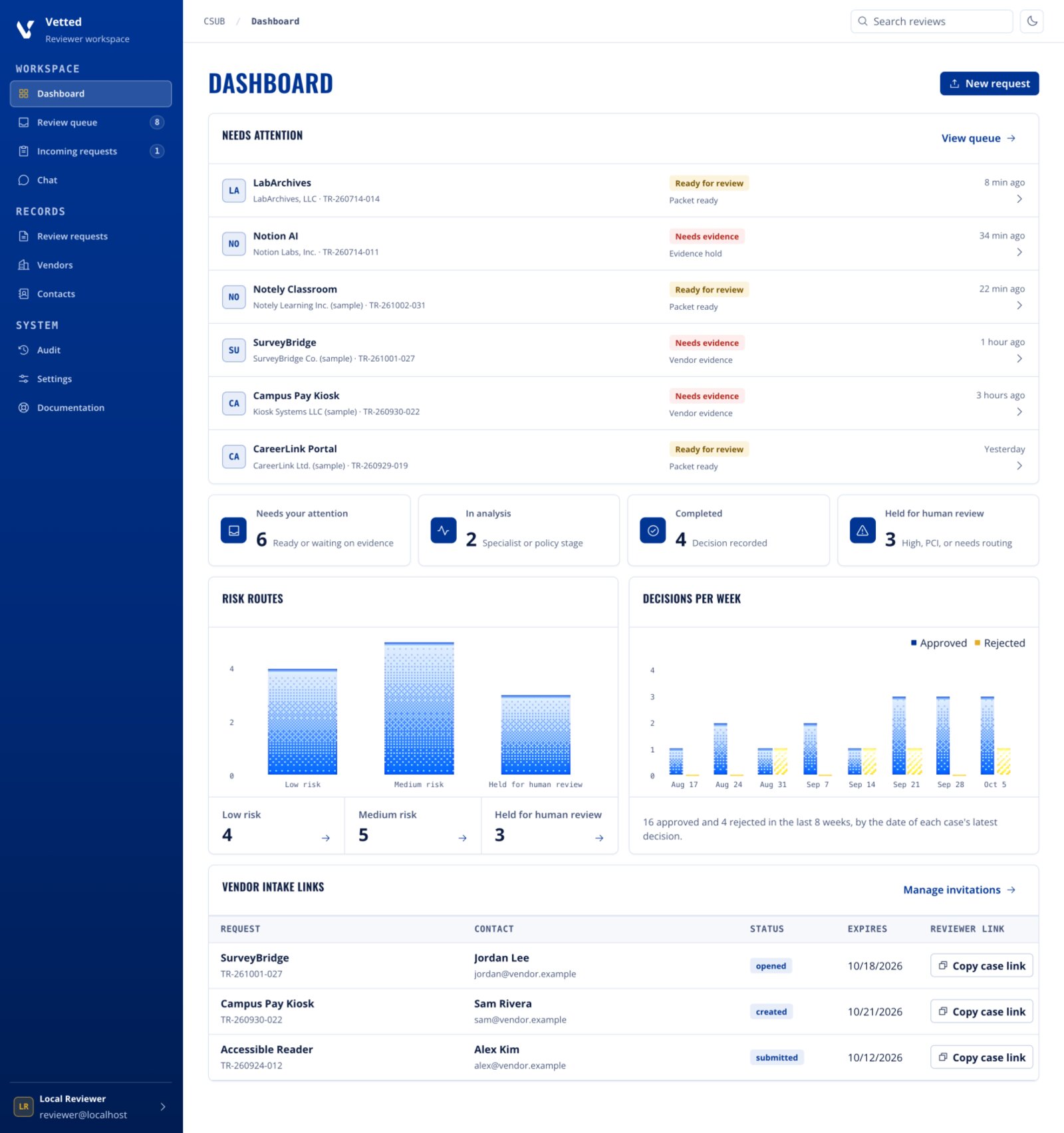
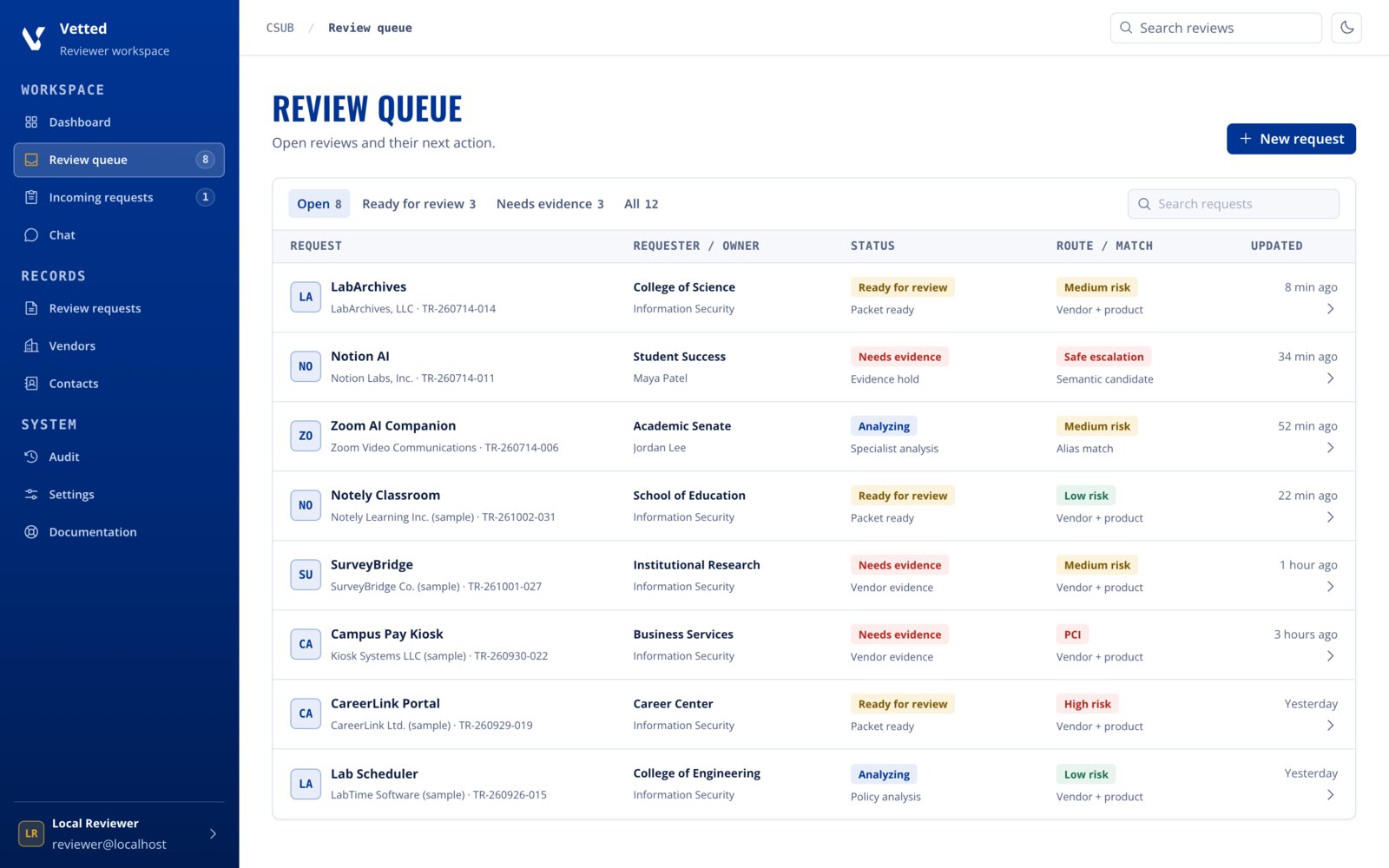
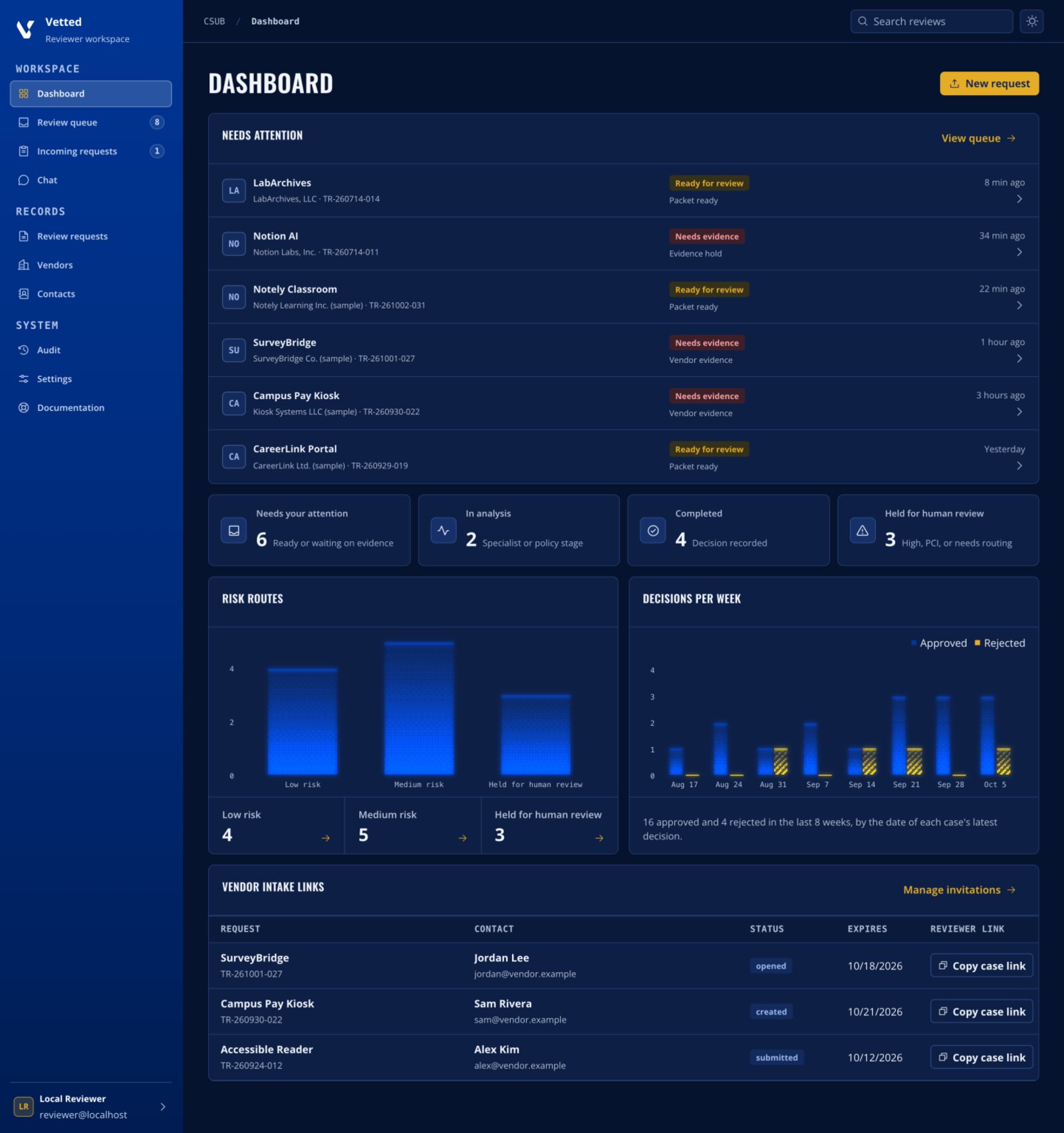
- Frontend design. The reviewer workspace above: a dashboard that leads with what needs a human, a queue that shows each request's status and risk route at a glance, vendor intake links with expiry, and light and dark themes.
- Backend rules and contracts. The explicit contracts between stages and the deterministic rules that decide where a request goes: low, medium or high risk, PCI, or held for human review. Agents can recommend; the rules and the reviewer decide.
- Hardening. Protected the agents against prompt injection, SSRF and citation errors with domain allowlists, deterministic policy routing and automated tests, so a vendor document can't talk the system into an approval.